
Blog
How to Survive a Meet Day

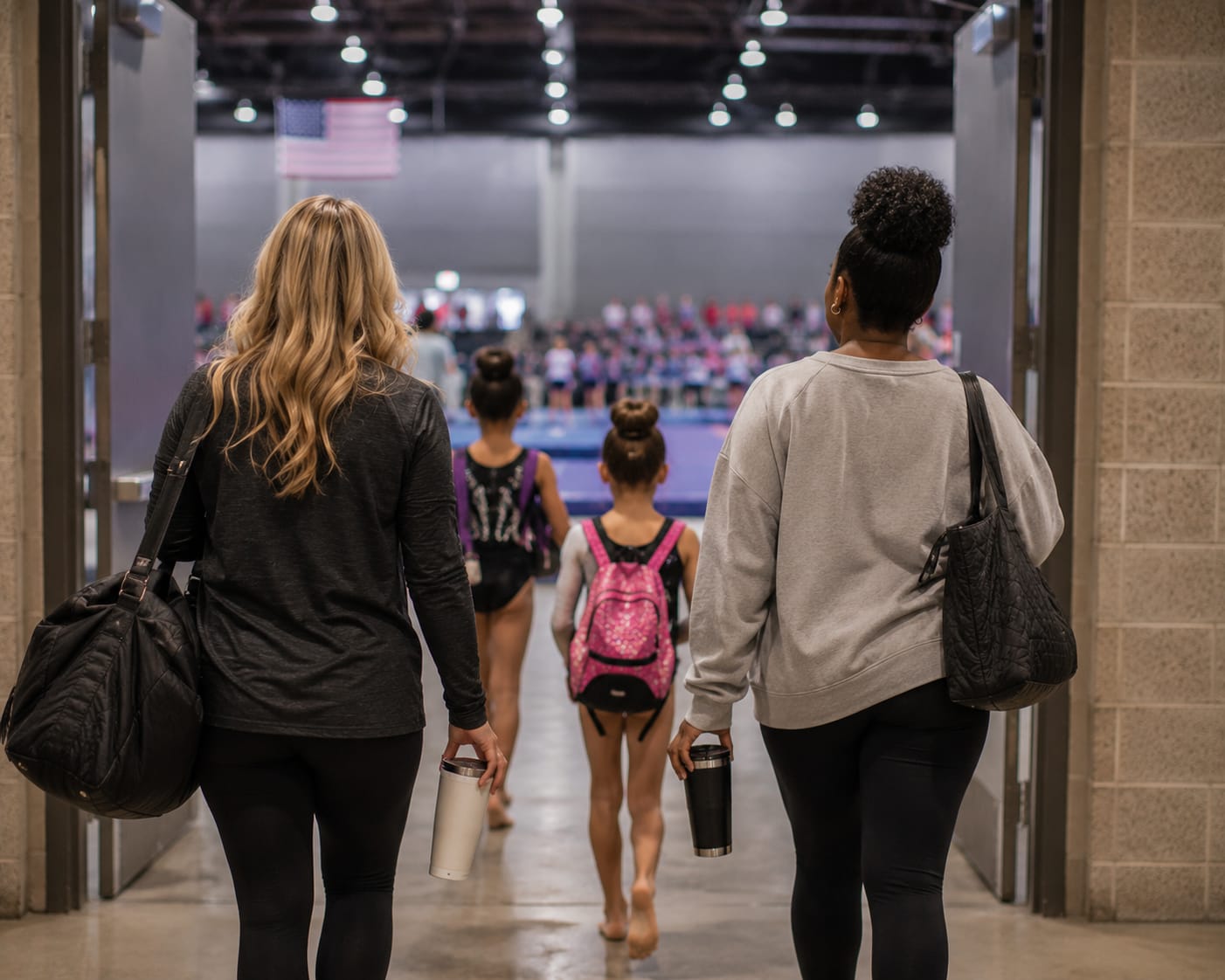
Nobody warns you that a gymnastics meet is mostly waiting. You picture the leotard and the lights and your kid sticking a landing, and all of that happens, for about six minutes total. The meet itself runs about three hours (give or take), in a gym you have never been to that is almost always either freezing or boiling. Add the drive, sometimes a long one, and you will spend far more of the day in the car and in your own head than she will ever spend on the floor.
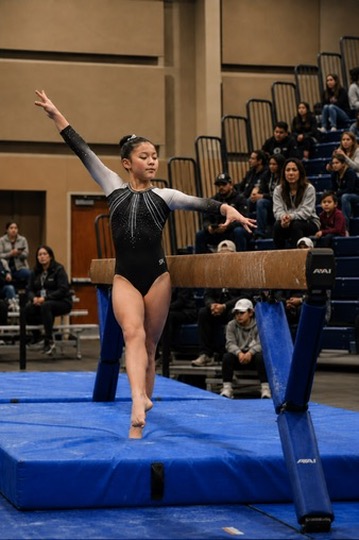
That is the part that sneaks up on you. All of it, the early alarm, the miles, the hours of quiet worry, comes down to a few short routines she gets one shot at. No do-over. She salutes the judge, she goes, and whatever happens happens. You brace the entire day for six minutes that are gone before you finish holding your breath.
Here is how to get through it without losing your mind, your back, or your sense of humor.
Her session time runs the whole day
The first thing that shapes everything is her session time, and you do not get to pick it. It gets assigned, and it can land anywhere. Draw an early session and you are doing meet hair in the dark. Draw a midday session and you are filling a long, slow morning while the nerves quietly build. Draw an evening session and you have a whole day to get through with a kid who has too much time to think about it. Find out which one you got, because the day bends around it.
If it is an early one, meet hair starts before the sun does. You will be doing a bun at 5:40 in the morning, slicking it back with gel until there is not a bump in sight, and whether you have caught every last flyaway will feel, in that moment, like the most important parenting decision you have ever made. It is not. But do it anyway, because for her it matters, and because a bun that holds is one less thing to fall apart on her later.
Lay everything out the night before. The competition leo. Grips if she uses them. Warmups. The team scrunchie or bow if the gym has rules about it, and most do. Snacks she will actually eat. Water. A backup hair tie, then three more, because hair ties at a meet evaporate. The coach will tell you to have her there by a certain time. Whatever that is, subtract for traffic and parking and the inevitable wrong entrance, and then subtract again for the fact that she will need the bathroom the second you arrive.
Get there early enough that she is not the kid sprinting in stressed. How a meet starts tends to be how it goes.
Then you wait, and waiting is a skill
Once you hand her off to the team, she is gone. Coaches take them. You go to the bleachers. You will not talk to her again until it is over, and you need to make your peace with that before the first event, because the urge to catch her eye and give a thumbs up will be strong and it is usually not the gift you think it is. Some kids find a parent’s face in the crowd and settle. Some find it and tighten up. You know which kind you have. Act accordingly.
Bring a cushion. The bleachers are a war crime against the human spine and you will be on them for hours. Bring layers, because you cannot predict the temperature and you will be wrong either way. Bring your own snacks and water, because the concession line is long and you will not want to lose your seat or miss her rotation.
Then settle in for the rhythm of it. Her group rotates through four events, warms up each one, competes each one, waits between each one. You are watching ninety seconds of your own kid wrapped in long stretches of other people’s kids, and that is the deal. Watch the other kids anyway. Clap for them. It is a long day for every family in that gym and the good ones look out for each other.
The scores will not make sense, and that is fine
Here is the truth about the scores. To you she is a ten, before she salutes the judge and after, and some stubborn part of you wants the scoreboard to just say so. It will not, and that is not a verdict on her. What you get instead is a number you cannot always read, because gymnastics scoring is its own language, a start value minus a pile of deductions you cannot see from where you sit, and trying to do the math in real time will only make you crazy. A wobble costs her. A bent leg costs her. A step on the landing costs her. None of it is visible to you at this distance, so resist becoming the parent narrating deductions in the stands. Watch her face instead. Her face tells you more than the scoreboard does.
The end matters most
However the day goes, the meet ends and she comes back to you, and this is the moment the whole long day was actually about. Not the score. This.
If it was a great day, easy. Celebrate it and let her ride it.
If it was a hard day, and there will be plenty of hard days, she does not need your analysis. She does not need “what happened on beam.” She needs a hug and a real meal and the certainty that the number did not change a thing about how you see her. The car ride home is sacred ground. Keep it free of coaching. Let her sit in it, or talk about something else entirely, or fall asleep against the window with her medal still around her neck.
Some nights, though, home is not where she goes first. The team wants to go out together, a long loud table somewhere, and those nights can be their own kind of medicine. A whole group of girls picking the meet apart over dinner, the good routines and the falls and the drama of it, builds the love of the sport in a way no medal does. On a hard day, watching her teammates fold her back in can do more for her than anything you could say.
But it is not always the right night for it. Some days she is spent, or quiet, or needs to cry somewhere the team cannot see, and the social hour on top of a long day is one thing too many. You will not always know which kind of day it is. She will. Let her tell you, in words or in the look on her face, whether she needs the team or needs to go home, and follow her lead. This is one of those places where the kid should get to guide us.
And on the nights it is just the two of you, the after-meet meal becomes its own tradition, the diner or the drive-through or the thing you always get. Years from now she will not remember most of the scores. She will remember that you were there, in the freezing bleachers, at whatever hour they gave you, on the cushion, every single time.
That is the survival skill that counts. Just keep showing up.